
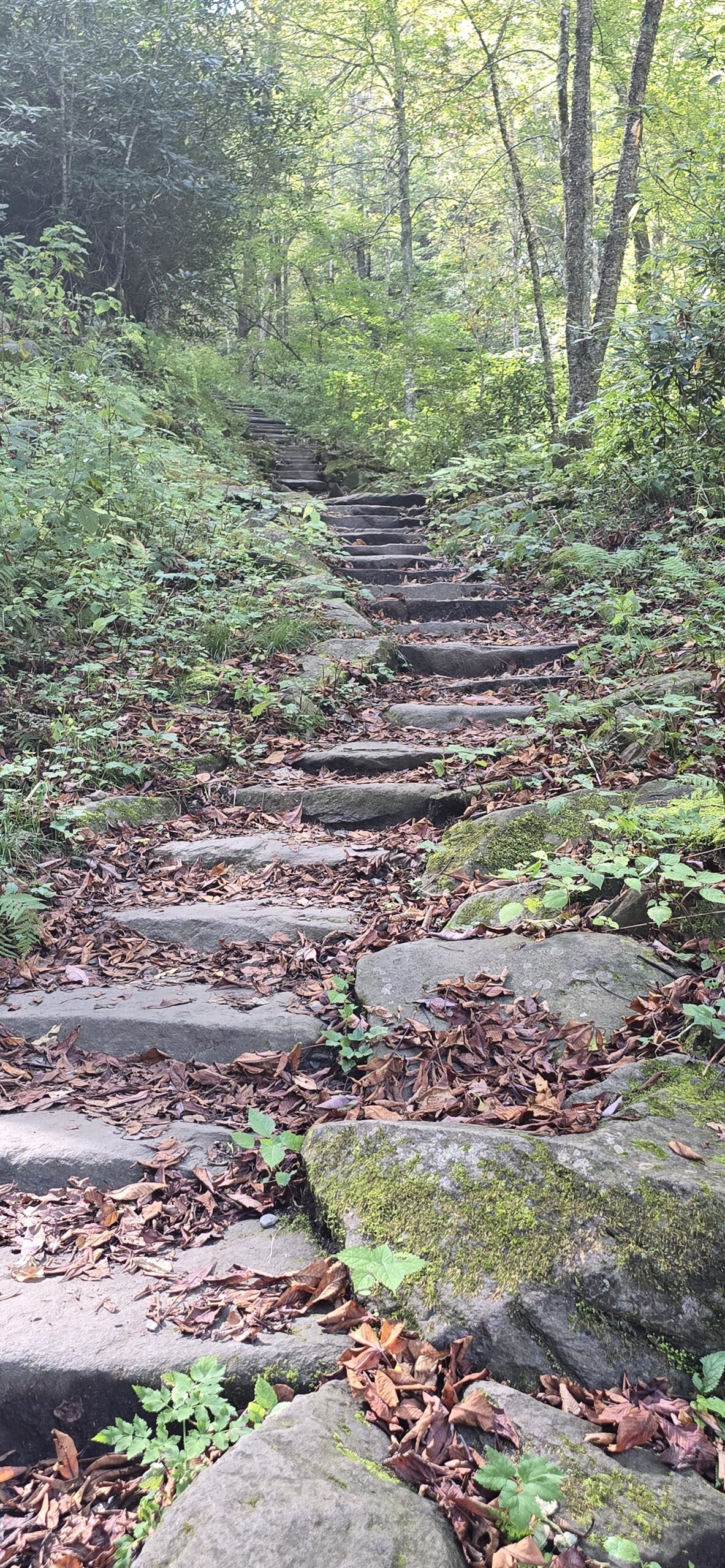
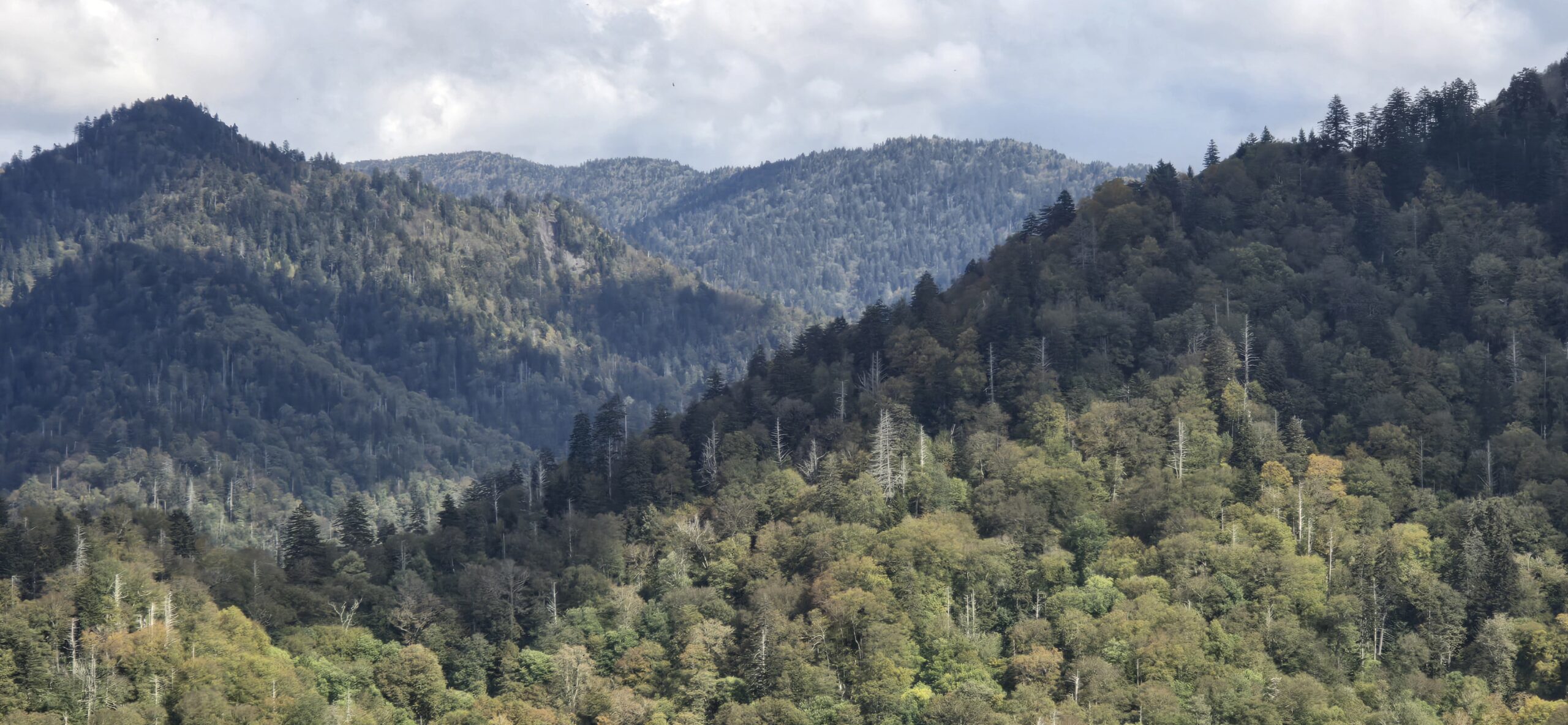
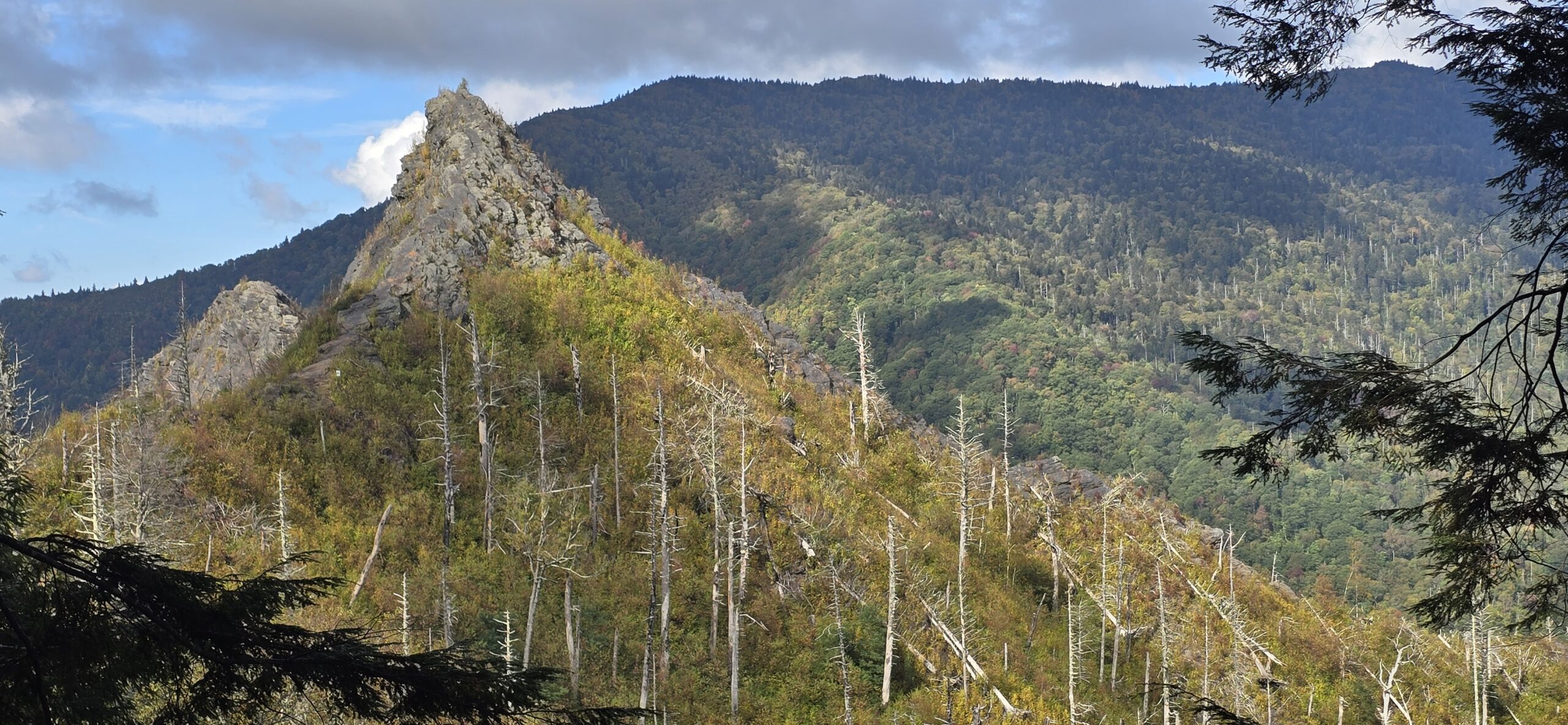
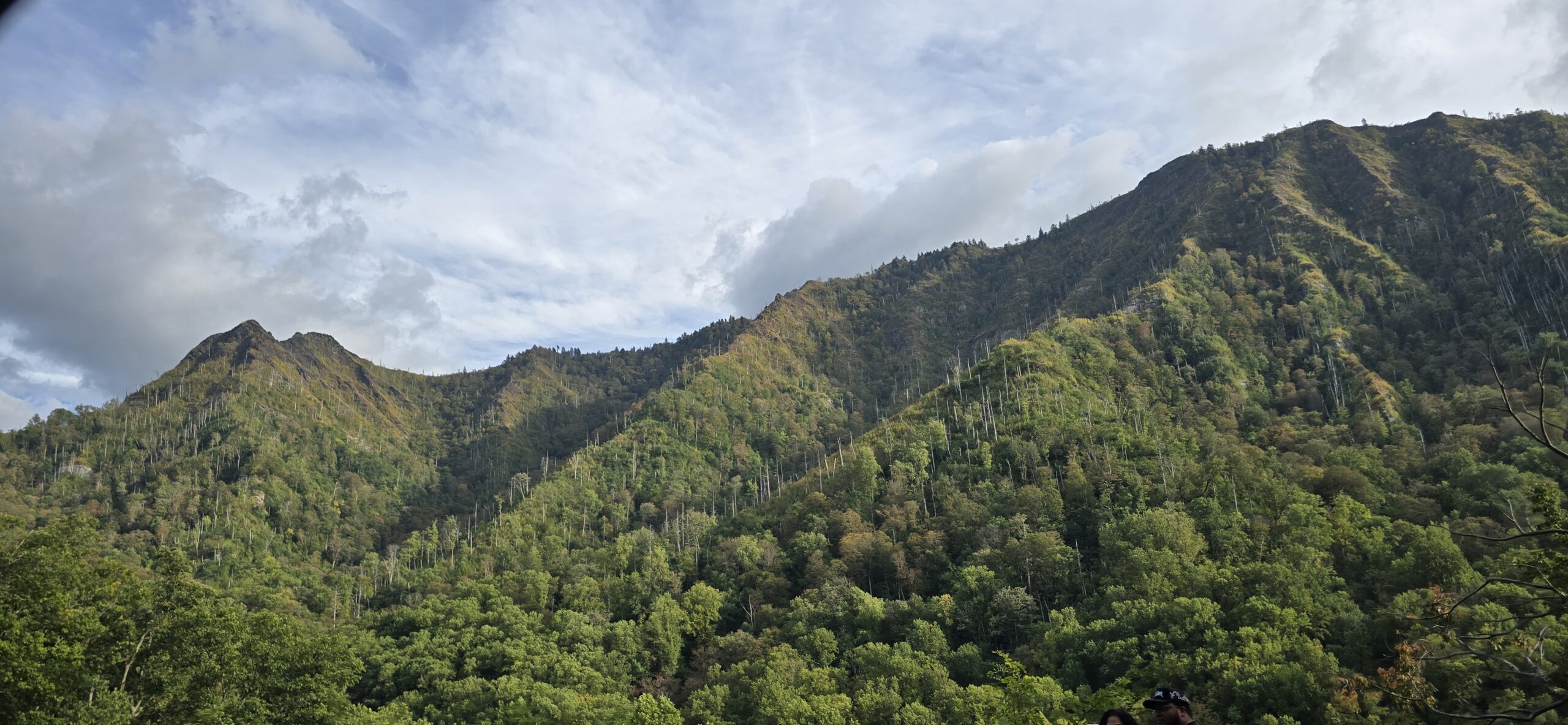
The trail’s origins trace back to the 18th and 19th centuries, when it was commonly called the Indian Gap Trail and used by Native Americans and early settlers. The Cherokee refer to the Chimney Tops as “Duniskwalgunyi,” or “forked antler,” reflecting the mountain’s distinctive double pinnacle shape. Stories and legends involving the area were embedded in Cherokee culture. In 1832, the Oconaluftee Turnpike was constructed nearby, enhancing accessibility, and during the Civil War, the route was further expanded by Cherokee leader Col. Will Thomas. The trail weaves through part of the old Road Prong Trail, making it one of the oldest in the Smokies region. See the photos here to see a small portion of the trail and some views from the overlook.
Several features have made the Chimney Tops Trail particularly popular:
- It is relatively short. The signs say 3.7 miles. When I use my app to measure the distance, I come up with around 4.2 miles. Short means steep. It has an elevation of over 1500 feet in less than two miles.
- It offers panoramic views of vistas and Mt LeConte.
- The route passes through lush forests featuring abundant wildflowers and picturesque streams, making it attractive for nature enthusiasts and photographers.
The uppermost section of the trail was damaged by wildfire in 2016, changing access to some summit areas. Currently, the last 0.25 miles remain closed to protect visitor safety, but the new viewpoint still offers spectacular scenery and remains a top destination within the park.
Overall, the combination of deep historical significance, beautiful vistas, and recent trail enhancements make Chimney Tops Trail a perennial favorite for park visitors.
The Chimney Tops Trail area, known to the Cherokee people as Duniskwalgunyi (“forked antler”), holds deep cultural and spiritual significance rooted in the tribe’s traditions and mythology.
The name Duniskwalgunyi derives from the shape of the mountain’s summit, which resembles deer antlers—a meaningful animal symbol in Cherokee culture. Cherokee legends reference this site in the myth of “Aganunitsi and the Uktena,” in which the medicine man Aganunitsi seeks out monsters and sacred amulets across these rugged peaks. The Chimney Tops area is thus associated with legendary quests, spiritual journeys, and encounters with powerful supernatural beings—points of connection between the physical and the spiritual world.
This region and associated trails were used as travel and trade routes by the Cherokee and figured prominently in regional storytelling. Chimney Tops, like other prominent natural features in the Smokies, provided inspiration for myths about creation, supernatural beings, and the presence of guardians such as the Yun’wi Tsundsdi (“Little People”), spirits believed to help or challenge travelers in the mountains. The area’s folklore, natural grandeur, and perceived spiritual energy all contributed to its revered status.
 English
0 Comments